Transmission-based precautions are the extra infection-control measures a hospital adds on top of standard precautions when a patient has, or may have, an infection that standard precautions alone would not contain. There are three types, each matched to how a germ travels: contact precautions, droplet precautions and airborne precautions. CDC's Guideline for Isolation Precautions (2007, last updated September 2024) treats standard precautions as the first tier, used for every patient, and transmission-based precautions as the second tier.
This page explains what each tier involves inside a hospital and why CDC lists pneumonic plague under droplet precautions. For how germs move between people in the first place, see how diseases spread.
What are standard precautions?
Standard precautions are the baseline for every patient, whatever the diagnosis. The 2007 CDC guideline builds them on one assumption: blood, body fluids, secretions, excretions other than sweat, broken skin and mucous membranes may all carry infection. CDC's standard precautions page (3 April 2024) lists what that means in practice:
- hand hygiene
- gloves, gowns, masks or eye protection, chosen for the exposure a task is likely to involve
- safe injection practices
- cleaning and disinfecting shared equipment and the patient's surroundings
- respiratory hygiene and cough etiquette
Transmission-based precautions never replace this baseline. The 2007 guideline says they are layered on top of standard precautions, either one at a time or in combination, when standard precautions alone do not fully block a germ's route.
Contact, droplet and airborne precautions compared
The table summarizes CDC's transmission-based precautions page (3 April 2024), the 2007 guideline and its Appendix A, the disease-by-disease list (updated 11 September 2026).
| Category | Transmission route it targets | What hospitals usually do | Examples |
|---|---|---|---|
| Standard precautions | Any route; used for all patients | Hand hygiene; gloves, gown, mask or eye protection when contact with body fluids is expected; safe injections; cleaning shared equipment | Every patient, including those with bloodborne viruses such as hepatitis B and HIV; bubonic plague |
| Contact precautions | Touch, either with the patient or with contaminated surfaces and equipment | Single room where available; staff wear a gown and gloves for contact with the patient or the room; dedicated equipment such as blood pressure cuffs; frequent room cleaning | MRSA and other drug-resistant bacteria, C. difficile, norovirus |
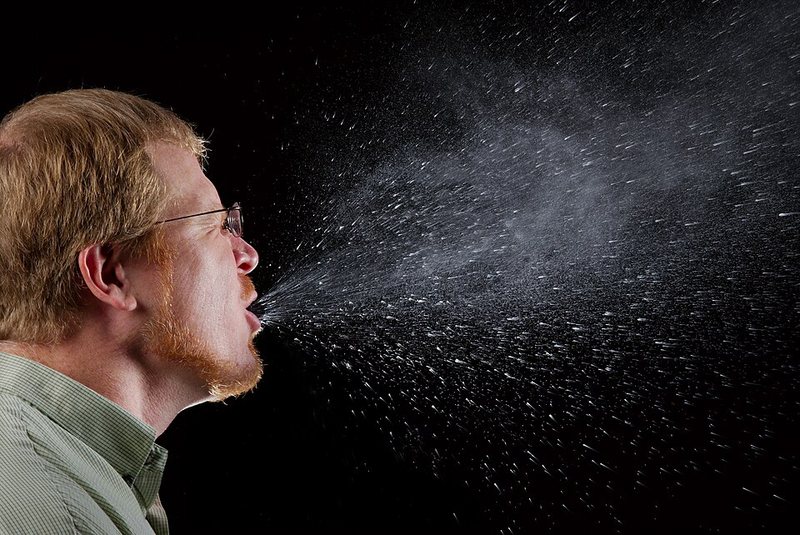
| Droplet precautions | Respiratory droplets from coughing, sneezing or talking that travel a short distance | A mask on the patient; single room if possible, or beds at least 3 feet (about 1 meter) apart with the curtain drawn; staff put on a mask when entering; no special ventilation | Whooping cough (pertussis), meningococcal disease, pneumonic plague |
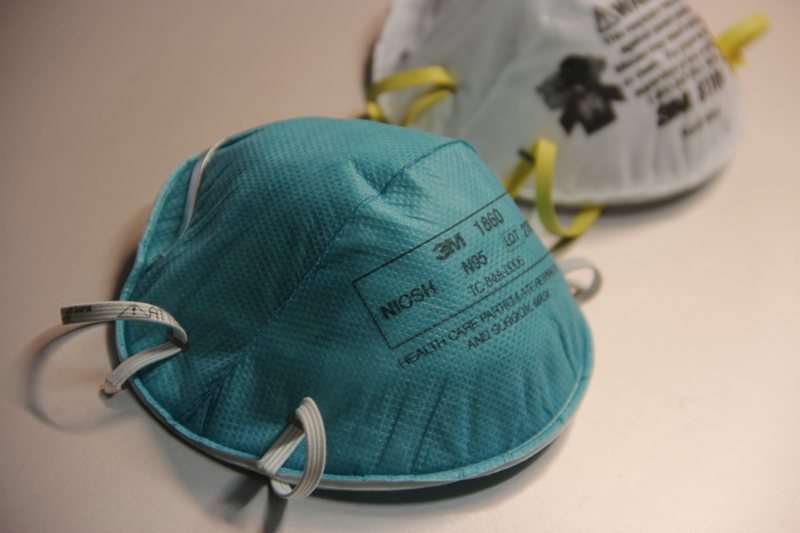
| Airborne precautions | Small particles that stay infectious in the air over time and distance | An airborne infection isolation room with negative pressure and 6 to 12 air changes an hour; fit-tested N95 or higher respirators for staff; staff without immunity kept out of measles or chickenpox rooms where possible | Tuberculosis, measles, chickenpox |
Some infections need more than one category. Appendix A lists chickenpox under both airborne and contact precautions, for example. Many entries also end at a set point after treatment starts: droplet precautions for meningococcal disease run until 24 hours after effective therapy begins, and for whooping cough until 5 days.
How hospitals decide which precautions to use
The route decides the category. WHO's aide-memoire on transmission-based precautions (20 June 2022) describes the same three types and says the choice depends on how the microorganism is transmitted.
Suspicion is enough to start. The 2007 guideline points out that laboratory tests can take two or more days, so hospitals begin precautions based on symptoms and the likely germ while results are pending. That is why CDC's recommendations cover patients who are known or suspected to be infected, and why CDC's plague guidance includes suspected cases until plague is ruled out.
Precautions also have costs. The same guideline notes that isolation can bring anxiety, a sense of stigma and less contact with staff, and asks hospitals to counter those effects. People who were exposed but are not ill are handled differently, through contact tracing and quarantine; see isolation vs quarantine.
What CDC lists for plague
CDC's Appendix A (updated 11 September 2026) lists bubonic plague under standard precautions only. It lists pneumonic plague under droplet plus standard precautions, to continue until 48 hours after effective antibiotic therapy begins, and notes antibiotic prophylaxis for exposed health care workers.
CDC's plague emergency guidance (reviewed 23 August 2024) gives fuller wording. Confirmed, probable and suspected pneumonic plague patients are isolated under standard and droplet precautions for the first 48 hours of antibiotic treatment and until they improve clinically, or until plague is ruled out. After that, droplet precautions can stop and standard precautions continue. The same page says patients should wear a surgical mask when they are moved, and that staff doing aerosol-generating procedures such as intubation should consider a fit-tested N95 respirator.
Bubonic plague gets no extra tier because, as WHO's plague fact sheet (updated 29 September 2026) says, human-to-human transmission of bubonic plague is rare; it usually starts with a flea bite. Consistent with standard precautions, CDC's guidance has staff wear a mask and eye protection or a face shield for procedures likely to cause sprays or splashes, such as bubo aspiration. WHO notes that bubonic plague can spread to the lungs; at that point the patient has pneumonic plague and the droplet listing applies. The forms are explained in pneumonic plague.
Why pneumonic plague gets droplet, not airborne, precautions
CDC's plague guidance puts it directly: "Person-to-person spread of pneumonic plague is via respiratory droplets, not fine aerosols." The plague table in the 2007 guideline sets out what that rests on:
- Close contact is needed. Spread between people requires close contact, and the risk is low in roughly the first 20 to 24 hours of illness.
- Treatment cuts infectiousness quickly. Respiratory secretions are probably no longer infectious within a few hours of starting appropriate antibiotics.
- Simple measures have worked. Masks, hygiene and avoiding close contact interrupted spread in many past pneumonic plague outbreaks, and CDC's current How plague spreads page (2024) puts the last known person-to-person spread in the United States in 1924.
Airborne precautions exist for a different kind of germ. The 2007 guideline reserves them for agents that stay infectious over long distances while suspended in the air, such as tuberculosis and measles, which is why those patients need negative-pressure rooms. For droplet-spread germs, it says, special air handling and ventilation are not required, because they do not remain infectious over long distances inside a health care facility. The exception is procedures that create fine aerosols, which is why CDC suggests N95 respirators for intubation even in pneumonic plague.
WHO's fact sheet describes pneumonic plague as spreading through "respiratory particles" and does not use the droplet or airborne labels; the droplet classification for plague is CDC's. The difference between the two routes, and where the line between them blurs, is covered in airborne vs droplet transmission.
How this relates to the suspected case in Irkutsk
This page describes CDC's general guidance for health care settings. It is not an account of the infection-control measures used in Russia. The case in Irkutsk was reported as suspected pneumonic plague, and WHO's Director-General said on 7 October that Russia had placed about 200 contacts in quarantine. On 10 October, WHO said in a Disease Outbreak News report that Russian authorities had told it tests on the worker and all contacts, including for plague, were negative for dangerous pathogens, and that the death was classed as pneumonia of undetermined etiology; WHO said it had not received information identifying the cause. WHO's fact sheet treats identifying and monitoring close contacts of pneumonic plague patients as a separate step from isolating patients. For the latest confirmed facts, see what happened in Irkutsk.
The PlaguePrimer team wrote this page to explain hospital practice, not to advise readers on masks or protective equipment. Questions about your own exposure or symptoms belong with a doctor or your local health department. See our medical disclaimer.