Diseases spread when a germ leaves one host and reaches the next, and the route it takes is called its mode of transmission. There is no single official list; this page groups the main modes into seven: direct contact, contaminated objects, respiratory droplets, airborne particles, vectors such as fleas and mosquitoes, food and water, and mother to child. Many germs can use more than one route. Plague, the example used across this site, uses three of them.
Direct and indirect transmission
CDC's teaching text Principles of Epidemiology in Public Health Practice (Lesson 1, last reviewed in 2012 and now archived) sorts the routes into two families:
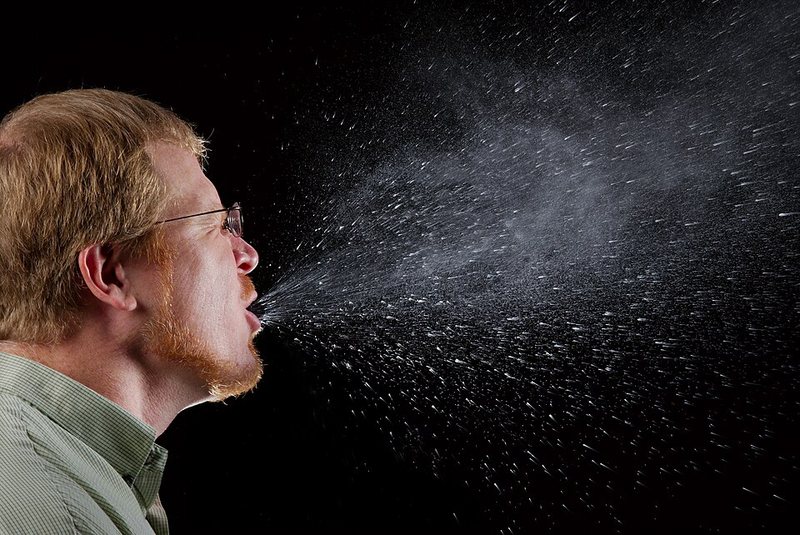
- Direct transmission: the germ passes straight from its source to a new host, by direct contact or by droplets sprayed over a short distance.
- Indirect transmission: something carries the germ in between. That can be particles suspended in the air, an object or substance such as food, water or blood (CDC calls these vehicles), or a living carrier such as an insect (a vector).
CDC notes that this is one classification among several. A 2017 chapter of the International Encyclopedia of Public Health, available on PMC, uses the same direct and indirect split and adds animal bites and mother-to-child transmission to the direct group.
In CDC's chain of infection, the mode of transmission is the middle link: a germ leaves its reservoir, travels by some mode of transmission, and enters a susceptible host. This page covers that middle link.
The main routes, with examples
| Route | How it spreads | Examples |
|---|---|---|
| Direct contact | Skin-to-skin contact, kissing or sexual contact, or touching soil that holds the germ | Infectious mononucleosis, gonorrhea, hookworm (from soil) |
| Indirect contact (surfaces) | The germ sits on an object, such as bedding, a door handle or a needle, and is picked up by the next person | Norovirus and hepatitis A carried on shared objects |
| Droplets | Larger drops from coughing, sneezing or talking travel a short distance before falling | Whooping cough (pertussis), meningococcal disease, pneumonic plague |
| Airborne (aerosols) | Very small particles stay suspended in the air and can be breathed in, even after the sick person has left | Measles, tuberculosis |
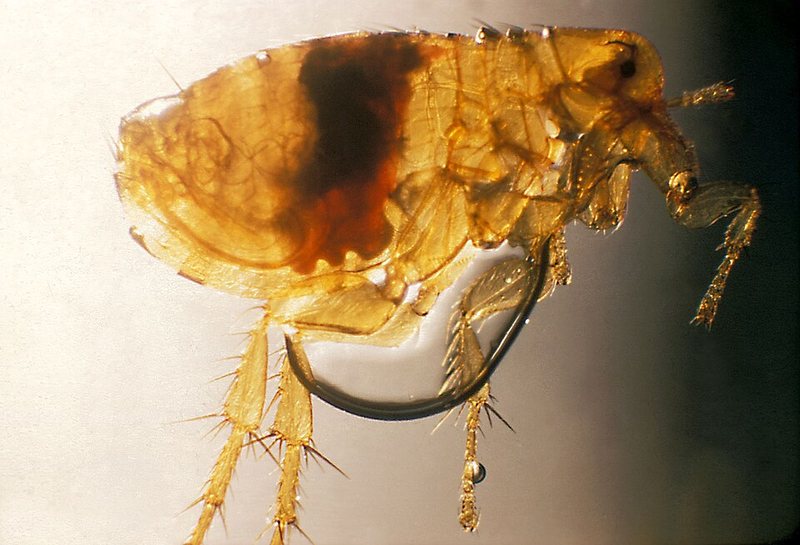
| Vectors | A living carrier, usually an insect or tick, picks up the germ and passes it on, often through a bite | Malaria and dengue (mosquitoes), Lyme disease (ticks), plague (fleas) |
| Food and water | Contaminated food or water is swallowed; many of these germs follow a fecal-oral route | Hepatitis A, botulism from badly canned food, many diarrheal diseases |
| Mother to child (vertical) | Across the placenta during pregnancy, or during birth or breastfeeding | Rubella, syphilis, toxoplasmosis, HIV, Zika |
Most examples come from the CDC lesson and the PMC chapter. The surface examples follow UKHSA's guidance on how infections spread in schools (updated 7 September 2026). The tick example comes from CDC's school infection prevention guide (reviewed May 2024).
Droplets vs airborne: a line that has shifted
The archived CDC lesson draws a sharp line. Droplets fall to the ground within a few feet, while much smaller dried particles, under 5 microns, can stay in the air for long periods and travel farther. Newer guidance is less strict. In April 2024, WHO and four public health agencies, including CDC and ECDC, agreed updated terminology that treats exhaled particles as a continuous range of sizes with no single cut-off.
Infection control guidance still names droplet and airborne precautions separately; CDC's 2024 plague guidance, quoted below, uses droplet precautions. The differences, and where plague fits, are explained in airborne vs droplet transmission.
How plague spreads: which modes apply
WHO's plague fact sheet (dated 29 September 2026) and CDC's page on how plague spreads (15 May 2024) describe three ways people catch plague:
| Plague route | Mode of transmission | What WHO and CDC say |
|---|---|---|
| Bite of an infected flea | Vector | CDC calls flea bites the most common route. They may result in bubonic or septicemic plague. |
| Handling an infected animal's tissue or body fluids | Direct contact | CDC's example is a hunter skinning an infected animal without gloves. WHO lists unprotected contact with infectious body fluids or contaminated materials. |
| Breathing in what a person with pneumonic plague coughs out | Droplets, at close range (CDC) | CDC calls these respiratory droplets, says spread typically requires direct and close contact, and says it is the only way plague spreads between people. WHO describes inhaling respiratory particles from a patient with pneumonic plague. |
Spread between people is tied to the pneumonic (lung) form. WHO says the pneumonic form can pass from person to person and cause epidemics, while human-to-human spread of bubonic plague is rare. CDC adds that cats with plague can pass infectious droplets to their owners or to veterinarians.
CDC's plague guidance for health workers (reviewed 23 August 2024) puts it plainly: pneumonic plague spreads between people "via respiratory droplets, not fine aerosols." The same guidance applies droplet precautions to caregivers within 6 feet (about 2 meters) of a patient. How the forms of plague differ is covered in pneumonic vs bubonic plague.
Why the mode of transmission matters
CDC's lesson says knowing how a germ leaves one host, travels and enters the next is the basis for choosing control measures. Plague shows how the measures follow the route:
- Vector route: control targets the carrier. WHO's fact sheet says flea control should come before rodent control, because killing rodents first sends their fleas looking for new hosts.
- Droplet route: control targets close contact. WHO says close contacts of pneumonic plague patients should be identified and monitored, and hospitals use transmission-based precautions matched to the route.
- Speed of spread: the route is only part of the picture. How long infection takes to show and how many people each case infects are covered in incubation period and R0.
In the Irkutsk case
The case reported from Irkutsk, Russia, in early October 2026 was reported as a suspected case of pneumonic plague. The cause has not been confirmed. WHO's Director-General said on 7 October that Russia had placed about 200 contacts in quarantine. On 10 October, WHO said in a Disease Outbreak News report that Russian authorities had told it tests on the worker and all contacts, including for plague, were negative for dangerous pathogens, and that the death was classed as pneumonia of undetermined etiology; WHO said it had not received information identifying the cause. Following up people who were near a patient is the standard response to the close-range droplet route described above. For the timeline and what is confirmed so far, see what happened in Irkutsk.
The PlaguePrimer team writes these pages to explain how disease spread works. They are not medical advice. For questions about your own health, talk to a doctor or your local health department, and see our medical disclaimer.