Droplet transmission and airborne transmission are two ways a germ can travel from one person's airways to another's. In droplet transmission, larger respiratory particles from coughing, sneezing or talking travel a short distance and then fall, so spread usually needs close contact. In airborne transmission, very small particles, often called aerosols, can stay suspended in the air and carry infection farther and for longer, sometimes to people who were never face to face with the sick person. Since 2024, WHO and several major health agencies have described these particles as one continuous range of sizes, so the airborne vs droplet line is less sharp than it used to be.
For routes that do not involve the airways, from fleas to food, see how diseases spread.
Airborne vs droplet transmission at a glance
| Route | Particles | Distance and time | Examples | Hospital precaution category |
|---|---|---|---|---|
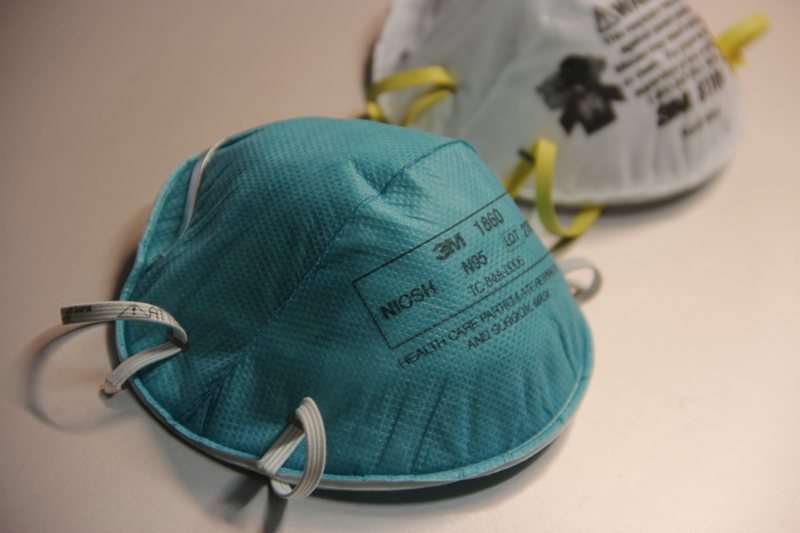
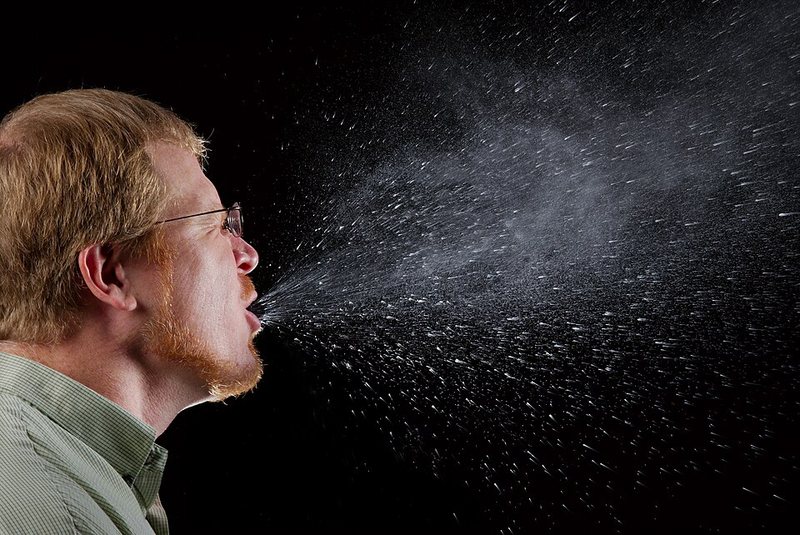
| Droplet | Larger respiratory droplets from coughing, sneezing or talking; traditionally defined as larger than 5 microns | A short distance before they fall; older guidance used about 1 meter (3 feet) as an example, not a fixed limit | Whooping cough (pertussis), influenza, meningococcal disease, pneumonic plague | Droplet precautions: a mask on the patient, a mask for staff entering the room, a single room where possible, no special ventilation |
| Airborne | Very small particles (aerosols, including dried "droplet nuclei"); traditionally 5 microns or smaller | Can stay suspended and infectious over time and distance, carried by air currents, even after the patient has left | Tuberculosis, measles, chickenpox | Airborne precautions: a negative-pressure airborne infection isolation room and fit-tested N95 or higher respirators for staff |
| "Through the air" (WHO, 2024) | Infectious respiratory particles of all sizes, with no single cut-off | Inhalation can happen at short or long range, depending on airflow, humidity, temperature and ventilation | WHO's list includes COVID-19, influenza, measles, MERS, SARS and tuberculosis | A shared vocabulary, not a hospital category; precaution lists still use droplet and airborne |
The droplet and airborne rows follow CDC's Guideline for Isolation Precautions (2007) and its transmission-based precautions page (reviewed 3 April 2024). The last row follows WHO's April 2024 terminology announcement. What each precaution category involves is covered in transmission-based precautions.
What is droplet transmission?
CDC's 2007 isolation guideline describes droplet transmission as respiratory droplets traveling directly from an infected person's airways to the eyes, nose or mouth of someone nearby, over short distances. CDC also counts droplet spread as technically a form of contact transmission.
How short is short? The guideline says the maximum distance is unresolved. Hospitals historically drew the risk zone at 3 feet (about 1 meter) around the patient, and WHO's 2020 guidance on COVID-19 transmission also placed droplet spread within 1 meter. The same CDC guideline, however, cites studies in which droplets from smallpox and SARS patients reached people 6 feet or more away. It calls 3 feet an example of a short distance, not a rule. What holds across sources is that droplet-spread germs do not stay infectious over long distances.
What is airborne transmission?
In the 2007 CDC guideline, airborne transmission means very small particles that stay infectious over time and distance. Air currents can carry them, and people can breathe them in without having been face to face with the patient, or even in the same room. CDC's standard examples are tuberculosis, measles and chickenpox, and hospitals contain them with rooms whose air is drawn out under negative pressure.
The guideline also describes a middle ground. Some germs usually counted as droplet-spread, such as influenza, show some evidence of spreading through small particles over more than 3 feet within a room. Procedures such as intubation can also create fine aerosols close to the patient.
Why the 5-micron line is disputed
For decades, guidance split respiratory particles at about 5 microns. WHO's 2020 guidance called particles larger than 5 to 10 microns respiratory droplets and those under 5 microns droplet nuclei. That cut-off, and the matching 1 to 2 meter distance rule, have been questioned on several fronts:
- CDC's own guideline flags it. The 2007 guideline says the 5-micron figure reflects how tuberculosis infects the lungs and does not carry over to other germs. It adds that particles of 30 microns or larger can stay suspended in the air.
- A historical review traced its origin. A 2021 review in the journal Interface Focus argued that the 5-micron threshold came from research on which particles reach deep into the lungs, not which particles stay airborne. It also argued that the evidence does not support a fixed 1 to 2 meter split between the routes.
- WHO and four agencies agreed new terms. In April 2024, WHO published a technical consultation report agreed with Africa CDC, China CDC, ECDC and the US CDC. It calls the particles "infectious respiratory particles," says they exist on a continuous spectrum of sizes with no single cut-off, and groups the routes under transmission "through the air." Within that, inhalation can happen at short or long range, and "direct deposition" covers particles landing on the mouth, nose or eyes of someone nearby.
The older labels have not disappeared from hospitals. CDC's transmission-based precautions page and its disease-by-disease Appendix A (updated 11 September 2026) still sort patients into droplet and airborne precautions. WHO said in 2024 that working out what the new terms mean in practice was a next step.
Definitions are evolving. Read 5 microns and 1 to 2 meters as historical rules of thumb, not exact boundaries.
Why pneumonic plague is treated as droplet spread
Pneumonic plague, the lung form of plague, is the form that spreads between people. The agencies that describe it point to a close-range route:
- CDC: its page on how plague spreads (15 May 2024) says people with plague pneumonia can cough out droplets carrying the bacteria; infection typically requires direct and close contact, and this is the only way plague spreads between people.
- ECDC: in a statement on 6 October 2026, ECDC said pneumonic plague is transmitted through cough droplets and that transmission "generally requires close and prolonged contact with an infected person who is already showing symptoms."
- CDC's isolation list: Appendix A (updated 11 September 2026) puts pneumonic plague under droplet plus standard precautions until 48 hours after effective antibiotics begin. Bubonic plague needs standard precautions only. CDC's plague emergency guidance (reviewed 23 August 2024) applies droplet precautions to caregivers within 6 feet of a patient and says spread is through droplets rather than fine aerosols.
- WHO: the plague fact sheet (29 September 2026) says people can be infected by inhaling respiratory particles from a patient with pneumonic plague. It does not use the droplet or airborne labels. It says patients should be isolated, masks for patients can reduce spread, and close contacts should be identified and monitored.
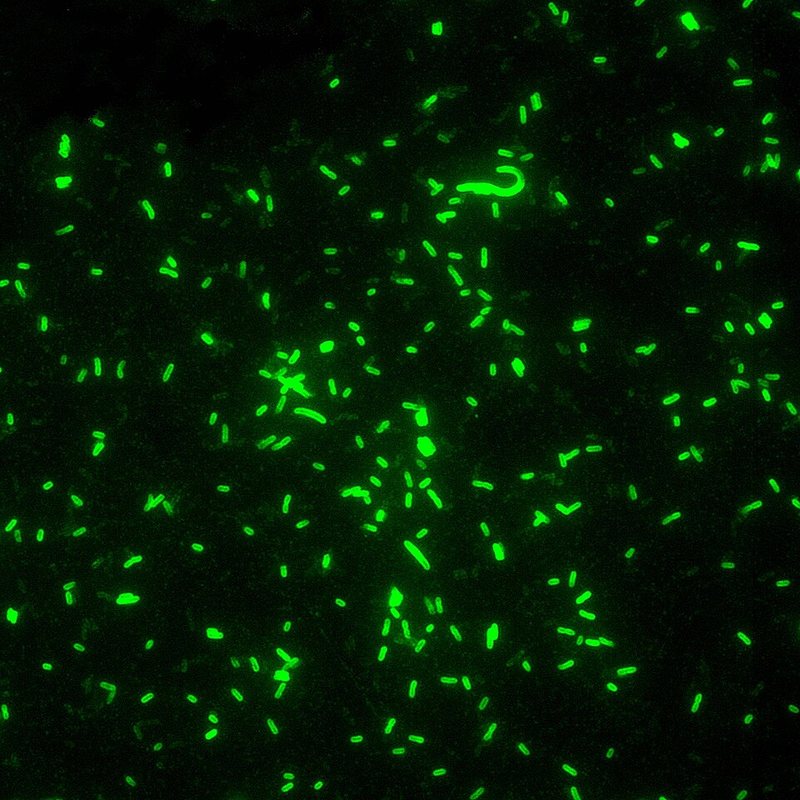
Taken together, the risk centers on someone who is already ill and coughing, at close range, over a sustained period. That fits the droplet category. CDC's plague table in the 2007 guideline adds that patients appear to pose little risk in roughly the first 20 to 24 hours of illness and are generally no longer infectious within hours of starting effective antibiotics. Measles and tuberculosis are different: the air in a room can carry them after the patient has gone, which is what airborne precautions are designed for.
Close range does not mean low concern: WHO's fact sheet calls pneumonic plague especially contagious and says it can trigger severe epidemics through person-to-person transmission, and WHO advises isolating patients and following up contacts. More on the disease itself is in pneumonic plague.
What this means for the suspected case in Irkutsk
ECDC described the case reported from Irkutsk, Russia, in early October as pneumonia suspected to be pneumonic plague; the cause has not been confirmed. WHO's Director-General said on 7 October that Russia had placed about 200 contacts in quarantine. On 10 October, WHO said in a Disease Outbreak News report that Russian authorities had told it tests on the worker and all contacts, including for plague, were negative for dangerous pathogens, and that the death was classed as pneumonia of undetermined etiology; WHO said it had not received information identifying the cause. Tracing and monitoring people who were near a patient is the standard public health response to a close-range route like this one. For confirmed facts and the timeline, see what happened in Irkutsk.
The PlaguePrimer team wrote this page to explain how infections travel, not to give medical or protective advice. Questions about your own exposure or symptoms belong with a doctor or your local health department. See our medical disclaimer.