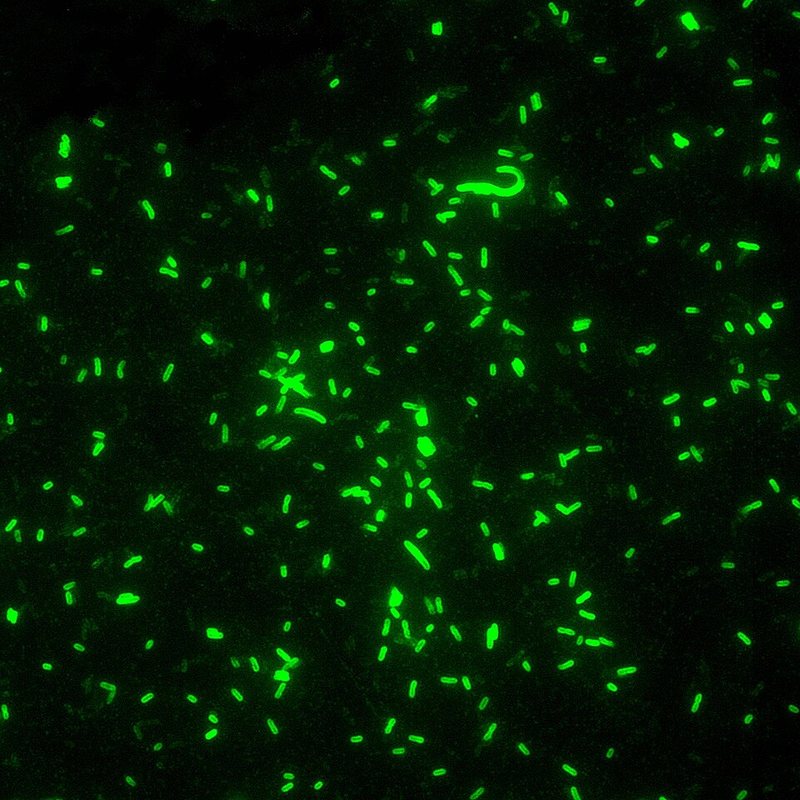
Pneumonic and bubonic plague are two forms of the same infection, caused by the bacterium Yersinia pestis, and they differ in where the infection takes hold. Bubonic plague infects the lymph nodes, usually after the bite of an infected flea, and does not normally spread from person to person. Pneumonic plague infects the lungs and is the form that can spread between people, through respiratory droplets. Both can be treated with common antibiotics, and early treatment matters.
Pneumonic vs bubonic plague at a glance
The table below uses WHO's plague fact sheet (updated 29 September 2026) and CDC's pages on plague symptoms and how plague spreads (May 2024).
| Bubonic plague | Pneumonic plague | |
|---|---|---|
| Where the infection is | Lymph nodes near where the bacteria entered | Lungs |
| How people usually get it | Bite of an infected flea; also handling an infected animal | Breathing in droplets from a person or animal with pneumonic plague, or spread to the lungs from untreated bubonic or septicemic plague |
| Spreads from person to person? | Not normally. WHO calls it rare | Yes, through respiratory droplets, usually after close contact (CDC) |
| Main signs | Fever, headache, chills, weakness and one or more swollen, painful lymph nodes ("buboes") | Fever, headache, weakness and a fast-developing pneumonia with cough, chest pain and shortness of breath |
| Incubation period | 2 to 8 days (CDC); WHO gives 1 to 7 days for plague in general | Can be as short as 24 hours (WHO) or 1 day (CDC) |
| If left untreated | Case-fatality ratio of 30% to 60% (WHO, 2026) | Always fatal, according to WHO (2026) |
| Treatment | Common antibiotics; early treatment matters | Common antibiotics; early treatment matters, and WHO says recovery rates are high when treatment starts within 24 hours of symptoms |
Bubonic plague is the most common form, WHO says. Pneumonic plague is less common, but WHO describes it as the most virulent form. For the timing behind these numbers, see what an incubation period is.
How is plague transmitted?
WHO lists three ways people catch plague: the bite of an infected flea, unprotected contact with infectious body fluids or contaminated materials, and breathing in respiratory particles from a patient with pneumonic plague. CDC's page on how plague spreads explains each route:
- Flea bites. This is the most common route. When many rodents die of plague, their hungry fleas look for other hosts, and people and animals visiting those places can be bitten. CDC notes that dogs and cats can carry infected fleas into the home. Flea bites lead to bubonic or septicemic plague.
- Contact with infected tissue or fluids. CDC gives the example of skinning an infected animal without gloves. This usually causes bubonic or septicemic plague.
- Infectious droplets. People and animals with plague pneumonia can cough out droplets that cause pneumonic plague in someone who breathes them in. CDC says this typically requires direct and close contact, and that it is the only way plague spreads between people. Cats are especially susceptible, and CDC reports rare pneumonic cases in people exposed to sick cats.
WHO advises isolating patients with pneumonic plague so they do not infect others; CDC says it spreads through respiratory droplets. For how droplet spread compares with other routes, see how diseases spread and airborne vs droplet transmission.
How plague survives in rodents and fleas
Plague is mainly a disease of animals. According to WHO, it is found in animals on every continent except Oceania, and there is a risk of human plague wherever natural foci of plague, meaning the bacteria, an animal reservoir and a vector, exist alongside people.
CDC describes two cycles. In the enzootic cycle, CDC says, scientists think the bacteria circulate at low rates in certain rodent populations without causing excessive die-off, so those rodents and their fleas act as a long-term reservoir. Occasionally other species become infected, causing an outbreak among animals called an epizootic. CDC says people are usually more at risk during or shortly after an epizootic, when dying rodents leave infected fleas looking for new hosts.
That flea behavior also shapes outbreak control. WHO advises controlling fleas before rodents, because killing rodents first makes their fleas jump to new hosts.
Plague rats and plague fleas
Many rodents can carry plague. CDC lists rock squirrels, ground squirrels, prairie dogs, chipmunks, wood rats, mice, voles and rabbits among the animals affected in the western United States. Rats come into the picture in towns: CDC says plague can occur in urban areas with dense rat infestations in some parts of the world, and the last urban outbreak linked to rats in the United States was in Los Angeles in 1924–1925.
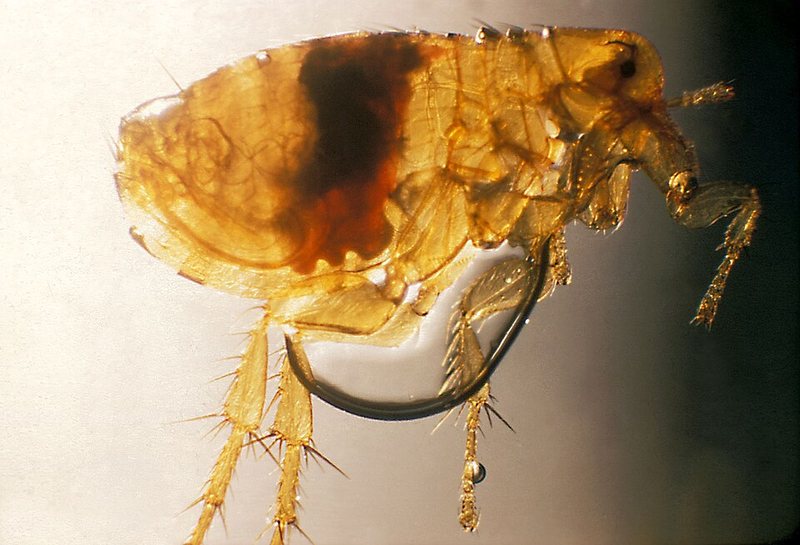
The flea in the photo at the top of this page is the oriental rat flea, Xenopsylla cheopis. A chapter on plague in the textbook Tropical Infectious Diseases (Elsevier, 2006) describes this flea, together with black and brown rats, as responsible for the global spread of plague during the third pandemic, which began in the second half of the 19th century.
The role of rats in older epidemics is debated. One 2018 modelling study in PNAS found that a model of spread by human fleas and body lice matched death records from nine European outbreaks of the era that included the Black Death better than rat-based models. That is a historical question; WHO and CDC still describe plague today as kept going by small mammals and their fleas.
What is septicemic plague?
Septicemic plague is the third main form. WHO says it happens when Y. pestis multiplies rapidly in the bloodstream, and that it can develop from any other form of plague. CDC adds that it can also be the first form a patient develops, after a flea bite or after handling an infected animal, and that its incubation period is poorly defined but likely a matter of days.
According to CDC, patients develop fever, chills, extreme weakness, abdominal pain and shock, and may bleed into the skin and other organs; skin and tissue on the fingers, toes and nose can turn black and die. WHO says septicemic plague, like pneumonic plague, is fatal if left untreated.
Can bubonic plague turn into pneumonic plague?
Yes. WHO says bubonic plague can advance and spread to the lungs, causing pneumonic plague, or to the bloodstream, causing septicemic plague. CDC says pneumonic plague develops when bacteria reach the lungs of a patient with untreated bubonic or septicemic plague. This is often called secondary pneumonic plague, to set it apart from primary pneumonic plague caught by breathing in droplets.
CDC says that if a bubonic plague patient is not treated with the right antibiotics, the bacteria can spread to other parts of the body. Once plague reaches the lungs, the patient can cough out infectious droplets, which CDC calls the only way plague spreads between people; WHO says human-to-human transmission of bubonic plague is rare.
How is plague treated?
All three forms are treated with antibiotics. WHO says antibiotic treatment is effective against plague bacteria, so early diagnosis and treatment can save lives, and that common antibiotics can cure pneumonic plague if given early. CDC's plague overview (updated 24 August 2026) says plague can be cured with antibiotics, but treatment must be given quickly.
This page explains how the disease works; it is not personal medical advice. Anyone worried about symptoms or possible exposure should talk to a doctor or their local health department. See our medical disclaimer.
What this means for the Irkutsk case
The case reported in Irkutsk, Russia, in early October 2026 was described as suspected pneumonic plague, and plague has not been confirmed. WHO's Director-General said on 7 October that Russia had placed about 200 contacts in quarantine. On 10 October, WHO said in a Disease Outbreak News report that Russian authorities had told it tests on the worker and all contacts, including for plague, were negative for dangerous pathogens, and that the death was classed as pneumonia of undetermined etiology; WHO said it had not received information identifying the cause. The attention on contacts follows from the difference on this page: pneumonic plague is the form that can pass between people. For what WHO and Russia have said, see what happened in Irkutsk, and for the lung form in detail, see pneumonic plague explained.